
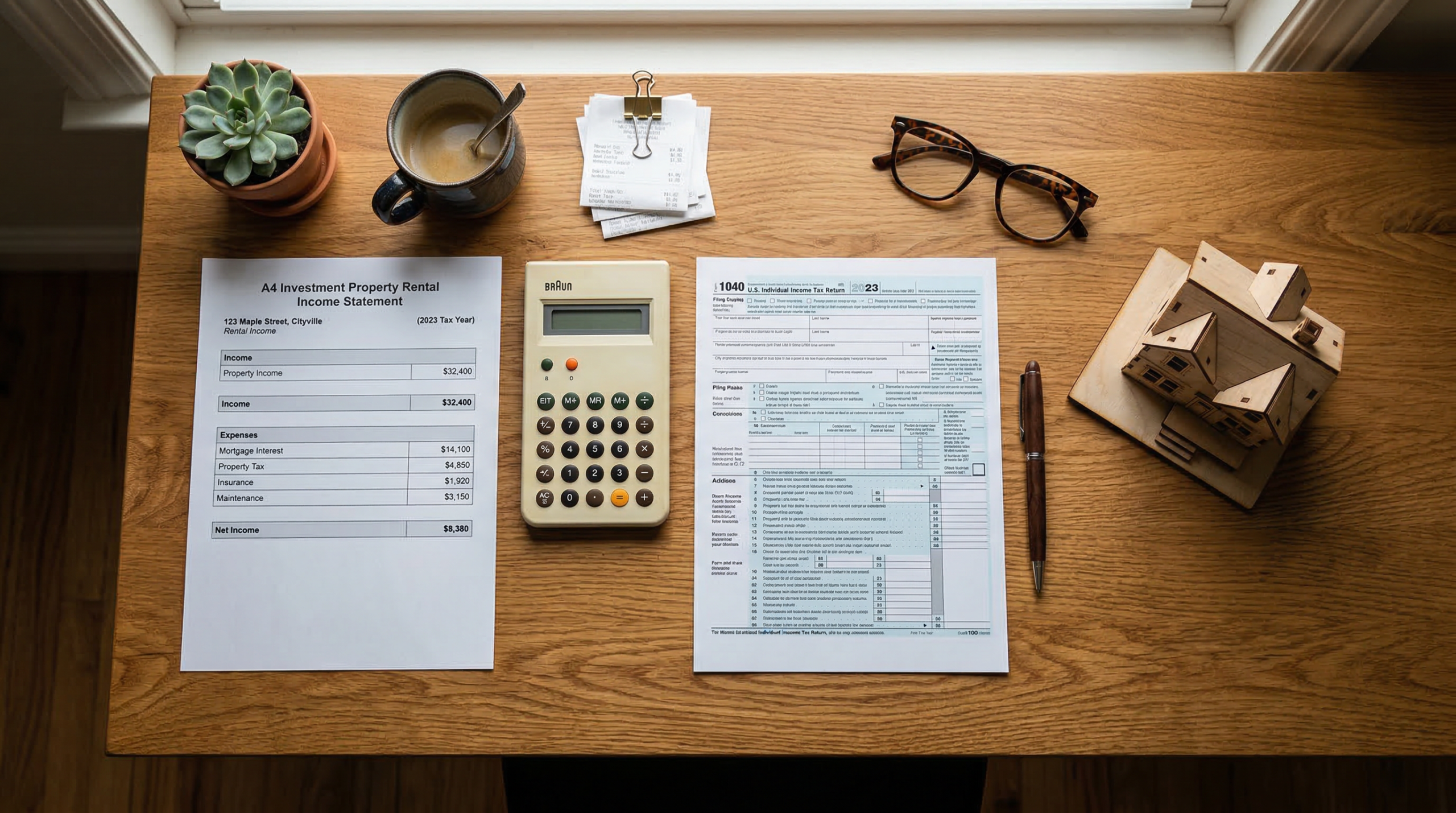
Owning an investment property in Australia comes with a generous set of tax deductions — but only if you claim them correctly. The ATO continues to focus heavily on rental property compliance, and the gap between a well-prepared claim and an audit-triggering one often comes down to record-keeping and a solid understanding of the rules.
This guide walks you through every major deduction available to Australian property investors in 2026, explains the rules behind each, and highlights the common mistakes that attract ATO scrutiny.
Loan Interest — Your Biggest Deduction
Interest on a loan used to purchase or improve an investment property is fully deductible against your rental income. This is typically the largest single deduction for most investors and a core driver of negative gearing strategies.
The key rule: the loan must be used for income-producing purposes. If you redraw funds for personal use — a holiday, a car, or renovating your own home — the interest on that portion is no longer deductible. Keep investment and personal loans completely separate to avoid this trap.
Depreciation: Division 40 and Division 43
Depreciation is a non-cash deduction allowing you to claim the decline in value of the property’s building and its fittings. The ATO splits this into two categories.
Division 43 — Capital Works Deductions
Division 43 applies to the structural elements of the building: walls, flooring, roofing, wiring and plumbing. For residential properties where construction commenced after 15 September 1987, you claim 2.5% of the original construction cost per year for up to 40 years. A $340,000 construction cost generates $8,500 per year in capital works deductions — regardless of the purchase price you paid.
Division 43 is calculated on the original construction cost, not the purchase price. A quantity surveyor’s report is the standard way to establish this figure. See our guide to the true costs of owning an investment property for how depreciation factors into your pre-purchase numbers.
Division 40 — Plant and Equipment
Division 40 covers fixtures and fittings — carpets, blinds, air conditioners, dishwashers — each depreciated over their effective life. New assets you install are fully claimable. Second-hand plant and equipment in an existing residential property cannot be depreciated under Division 40 unless you are a property developer or the property is brand new. This rule has applied since 2017.
Repairs vs Improvements: A Critical Distinction
Repairs restore an asset to its original condition — fixing a broken fence, patching a leaking roof, repainting a weathered exterior. These are immediately deductible in the year incurred.
Capital improvements enhance the property beyond its original state — adding a deck, renovating a kitchen, installing solar panels. These are capital in nature and must be depreciated over time under Division 43 or 40, not claimed immediately. Work on a newly acquired property before it is first rented is treated as a capital improvement, not a repair, regardless of how it looks.
Property Management Fees, Insurance and Land Tax
Fees paid to a property manager are fully deductible, including management fees (typically 7–10% of rental income), letting fees, advertising costs and lease preparation. Council rates, water service charges, strata fees and body corporate levies are also deductible. Insurance premiums — landlord, building and contents — are fully deductible in the year incurred.
Land tax assessed on your investment property is deductible for the year it is incurred and to the extent it relates to the rental property. Each state applies its own threshold and rate. See our capital gains tax guide for how land tax interacts with your long-term strategy.
Travel Deductions: Restrictions Still Apply
Since 1 July 2017, individuals can no longer claim travel expenses to inspect, maintain or collect rent from a residential investment property. Flights, petrol, accommodation and meals related to property visits are not deductible for most individual investors. There are narrow exceptions for those carrying on a formal business of property investing, or for excluded entities such as companies or trusts.
Negative Gearing and Borrowing Costs
When total deductible expenses exceed rental income, the net loss can be offset against other assessable income, including salary. This is the foundation of negative gearing strategy. Borrowing costs — loan establishment fees, mortgage registration fees and LMI if applicable — are deductible over five years or the loan term, whichever is shorter. Our negative gearing guide covers this in detail, and our rental yield guide shows how to model your full return.
Common ATO Audit Triggers for Property Investors
Rental property deductions are an explicit ATO compliance priority for 2025–26. The following patterns most commonly attract scrutiny:
- Overclaiming interest — particularly where redraws have been used for personal purposes
- Claiming capital improvements as repairs — the most common audit issue in rental claims
- Holiday homes with private use — from November 2025, the ATO has taken a stricter view, potentially treating mixed-use properties as ‘leisure facilities’ that disallow deductions entirely. A transitional period applies until 1 July 2026
- Below-market rent to relatives — deductions are limited to actual income derived
- Missing rental income — the ATO cross-matches data from property managers, Airbnb and Stayz
- Claiming travel on residential rental properties — still attempted despite the 2017 ban
Keep receipts, invoices, loan statements and property manager reports for everything you claim. The ATO can review claims up to five years after lodgement. Visit our property investment hub for more guidance on managing your investment correctly.
FAQ
Can I claim depreciation on a second-hand investment property?
You can claim Division 43 capital works on any property where construction began after 15 September 1987, whether new or second-hand. Division 40 plant and equipment depreciation on second-hand residential properties is not available to individual investors under 2017 rules. New assets you install yourself remain claimable under Division 40.
When does investment loan interest become non-deductible?
When loan funds are used for private purposes. If you redraw on an investment loan for personal spending — a car, holiday or home renovation — that portion of interest is not deductible. The ATO can trace the purpose of loan funds, so keeping investment and personal borrowings completely separate is essential.
What records do I need to keep for investment property deductions?
All receipts and invoices for expenses claimed, loan statements showing interest charged, rental income statements from your property manager, insurance certificates, council rate and land tax notices, and your depreciation schedule. Retain these for at least five years after lodgement.
Are body corporate fees deductible?
Yes. Body corporate or strata levies are fully deductible in the year incurred as they relate to the ongoing maintenance and administration of your investment property. Special levies for capital works may need to be capitalised and depreciated rather than claimed immediately.
Related Reading
- Property Investment: Getting Started
- Negative Gearing Explained
- Capital Gains Tax for Property Investors
- Guide to Rental Yields
Get Your Investment Structure Right From the Start
Maximising your tax deductions starts with structuring your loan correctly — and that means getting advice before you buy, not after. Lagos Financial works with property investors across Australia to ensure your finance structure supports your tax position from day one. Book a complimentary assessment and let’s talk through your investment loan options.




Victor Lagos
Founder & Mortgage Broker, Lagos Financial
Victor Lagos is a licensed mortgage broker and property investment strategist. As founder of Lagos Financial, he helps Australians build wealth through tailored finance solutions, working with 60+ lenders nationwide. He also hosts the Debt to Financial Freedom podcast.
Book a Free Assessment →