
Last updated: March 2026
Owning property in Sydney, Melbourne, or Brisbane feels further out of reach with every rate hike. But walking away from the market entirely means watching property values grow without you. Rentvesting flips the script: you keep renting where you want to live and buy an investment property somewhere you can actually afford.
It’s not a fringe strategy. According to REA Group data (January 2026), 7% of Sydney first-home buyers searching on realestate.com.au were also signalling investment intent — meaning they’re looking to buy as an investor rather than to live in. Nationally, 5.5% of first-home buyers are doing the same. And over 2024, 8,283 first-home buyers chose investment property loans — a 12% jump year-on-year.
This guide breaks down exactly how rentvesting works in 2026, where the numbers stack up, and how a national mortgage broker can help you structure it correctly.
What Is Rentvesting — and Why Is It Growing?
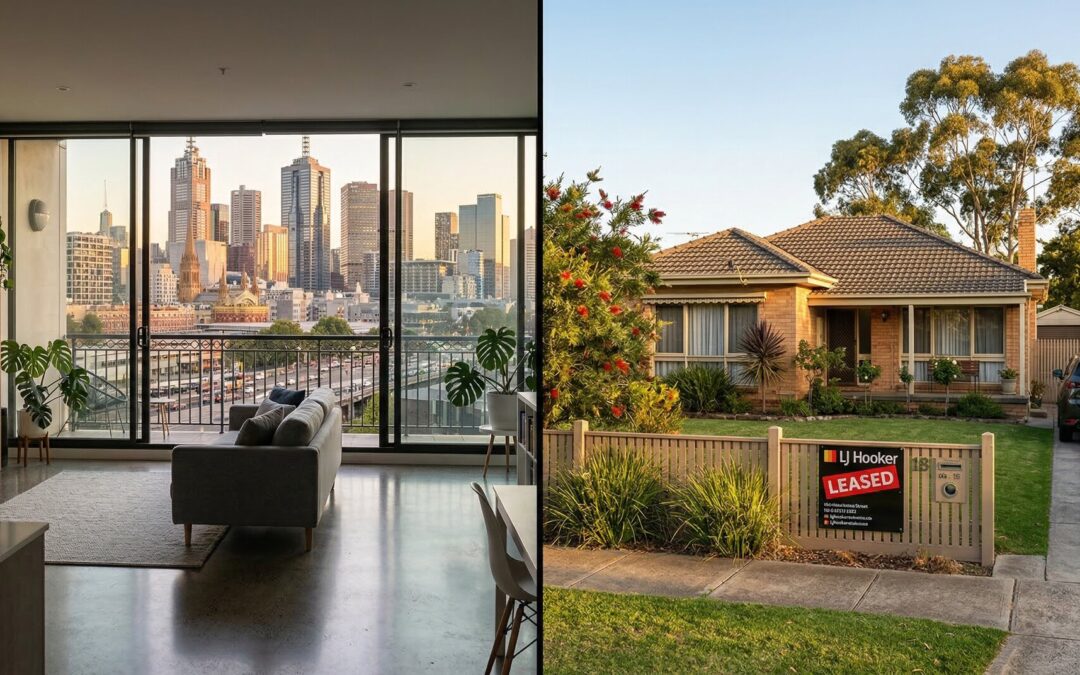
Rentvesting means you rent your home in a location that suits your lifestyle or work, while simultaneously purchasing an investment property in a more affordable market with strong growth potential. You build wealth through your investment without sacrificing where you live.
The maths driving this trend are stark. The median house price in Sydney sits well above $1.4 million. In Melbourne, it’s over $900,000. Even with a 20% deposit, you’d need $280,000 or more saved just to get into Sydney. Meanwhile, a well-located property in Brisbane, Adelaide, or a regional growth corridor might cost $500,000–$650,000 — with a 10% deposit bringing your entry cost down to $50,000–$65,000 plus purchase costs.
A Westpac 2025 report found 54% of first-home buyers are actively considering rentvesting. The affordability crunch isn’t easing — which is exactly why this approach keeps gaining momentum.
The Financial Case: Where Do the Numbers Work in 2026?
The core question with rentvesting is whether the rental income from your investment property can meaningfully offset your holding costs. In 2026, there are several Australian markets where the numbers stack up well.
Markets with Strong Rental Yields
According to OpenAgent’s 2026 rental yield data, Brisbane is delivering 4–5.7% gross yields in inner-city suburbs, with houses in outer areas like Stapylton returning 5.6% on a $420,000 median. Adelaide’s northern corridor is consistently producing 5%+ yields. Perth’s apartment markets in suburbs like the CBD and Swan View are hitting 6–7%.
For regional options, Tasmania continues to perform strongly. East Devonport apartments are delivering 7.5% gross yields on median prices around $279,000 — one of the more compelling yield stories in the country for that price point. Regional Queensland mining and coastal hubs are producing even higher yields for those comfortable with the associated risks.
A Real-World Example
Take a 30-year-old earning $95,000 a year, currently renting in inner Sydney for $650 per week, with $85,000 in savings. They purchase a $600,000 house in Brisbane with a 10% deposit. Their annual picture might look like this:
- Mortgage repayments (P&I, 30 years at ~7%): $41,844
- Rental income from the Brisbane property: $28,600 (at $550/week)
- Cash shortfall before expenses: $13,244
- Management, insurance, rates, maintenance: ~$7,688
- Total pre-tax holding cost: ~$20,932 per year
After accounting for negative gearing deductions and depreciation at a 32.5% marginal tax rate, the net annual cost can drop to approximately $13,000 — or around $250 per week. That’s the cost of building a property portfolio while living where you want. Explore your own numbers through our property investment guide.
Tax Benefits of Rentvesting
One of the advantages of rentvesting over buying a principal place of residence is access to significant tax deductions. These are not available on the home you live in.
Negative Gearing
If your investment property’s costs exceed its rental income, that shortfall is deductible against your other income — reducing your tax bill. At a 32.5% marginal rate, a $20,000 annual shortfall translates to roughly $6,500 back at tax time. Our negative gearing guide explains exactly how this works and what you can claim.
Depreciation
New and near-new investment properties also qualify for depreciation deductions — covering both the building structure (Division 43) and fixtures like appliances, carpets, and blinds (Division 40). A professional depreciation schedule, which costs $400–$700 and is itself tax-deductible, can identify $10,000–$15,000 in Year 1 deductions on a newer property.
What You Give Up
Rentvesting means foregoing the first-home buyer grants and stamp duty concessions available to owner-occupiers. As an investor, you pay full investor stamp duty rates and are not eligible for the First Home Guarantee (which is owner-occupier only). You also pay capital gains tax on eventual sale — though the 50% CGT discount applies after 12 months of ownership. Understanding these trade-offs before you commit is essential. See our full breakdown of buying a property as an investor.
How Brokers Structure Rentvesting Loans Differently
Investor loans are structured differently from owner-occupier loans, and lenders assess them differently too. As a rentvestor, you’re applying for an investment property loan while also showing rental expense as a liability (your Sydney rent). This affects how lenders calculate your borrowing capacity.
Most lenders require a 10% deposit for investor loans, compared to as little as 5% for first-home buyers using the First Home Guarantee. Lender’s Mortgage Insurance (LMI) applies if your deposit is under 20%, though some lenders are more competitive on LMI pricing for investment loans than others.
Your broker also needs to understand investment property loan options — including interest-only periods, offset accounts on investment loans, and how rental income is assessed (typically at 75–80% of the actual rent to account for vacancies and expenses).
APRA’s DTI Cap and What It Means for You
From 1 February 2026, APRA introduced a formal debt-to-income cap: banks can only write 20% of new mortgages to borrowers with total debt exceeding six times their gross income. If you’re renting in Sydney and borrowing to invest, your DTI may push into this territory — particularly if you have other debts.
The key insight: the cap applies to individual lender portfolios. Some lenders will exhaust their high-DTI quota faster than others. A broker who tracks which lenders currently have capacity is invaluable in this environment. It’s not just about finding the best rate — it’s about finding the right lender for your specific scenario.
Rental Yield Vs. Capital Growth: Which Should You Prioritise?
Rentvesting works best when you balance yield (income now) with capital growth (wealth over time). High-yield properties in regional or mining areas reduce your weekly holding costs but may not deliver the same long-term capital gains as properties in major growth corridors.
The strongest rentvesting markets in 2026 tend to combine reasonable yields (4%+) with solid growth fundamentals: population growth, infrastructure investment, and tight vacancy rates. Brisbane’s outer suburbs, Adelaide’s northern corridor, and Perth’s growth areas all fit this profile. For a yield-focused breakdown, see our guide to rental yields.
Frequently Asked Questions
Can I use the First Home Guarantee if I’m rentvesting?
No. The First Home Guarantee (and most state-based first-home buyer concessions) are for owner-occupiers only. As a rentvestor purchasing an investment property, you won’t be eligible for these schemes. You also won’t qualify for first home owner grants in any state. This is a genuine trade-off — and one worth modelling with your broker before deciding.
Do I need a 20% deposit to buy an investment property?
No, but most lenders require at least 10% for investment loans, and you’ll generally pay LMI if you’re under 20%. Some lenders are more competitive on LMI for investors than others. Your borrowing capacity will also be assessed differently to an owner-occupier loan, taking into account your rental income (at a discounted rate) and your existing rental expenses.
What happens to my tax when I eventually move into the investment property?
If you move into your investment property, it can become your principal place of residence, which changes your CGT position. There are rules governing the timing of this transition, and careful planning is required to maximise your CGT exemption. This is an important part of the long-term rentvesting strategy — your broker and accountant should work together on this.
Is rentvesting worth it if interest rates are high?
Higher rates increase holding costs, but the fundamentals of rentvesting — entering the market, accessing tax deductions, and building equity — remain sound over a 7+ year horizon. The key is ensuring your cash flow buffer is sufficient (ideally 6 months of holding costs) and that you’re buying in a market where the yield covers a meaningful portion of your repayments. A broker can model this under multiple rate scenarios before you commit.
Related Reading
- Property Investment Strategies — Lagos Financial
- The Complete Guide to Negative Gearing in Australia
- Understanding Rental Yields: What You Need to Know Before You Buy
- Investment Property Loan Options Explained
Ready to Explore Rentvesting?
Rentvesting isn’t one-size-fits-all. The right market, loan structure, and tax strategy depend on your income, existing savings, risk tolerance, and long-term goals. At Lagos Financial, we work with investors across Sydney, Brisbane, Melbourne, Hobart, and beyond — structuring rentvesting loans that make sense on paper and in practice. Book a complimentary assessment and let’s look at what’s possible for you.
When you are ready to move on, see our guide on upgrading your home.